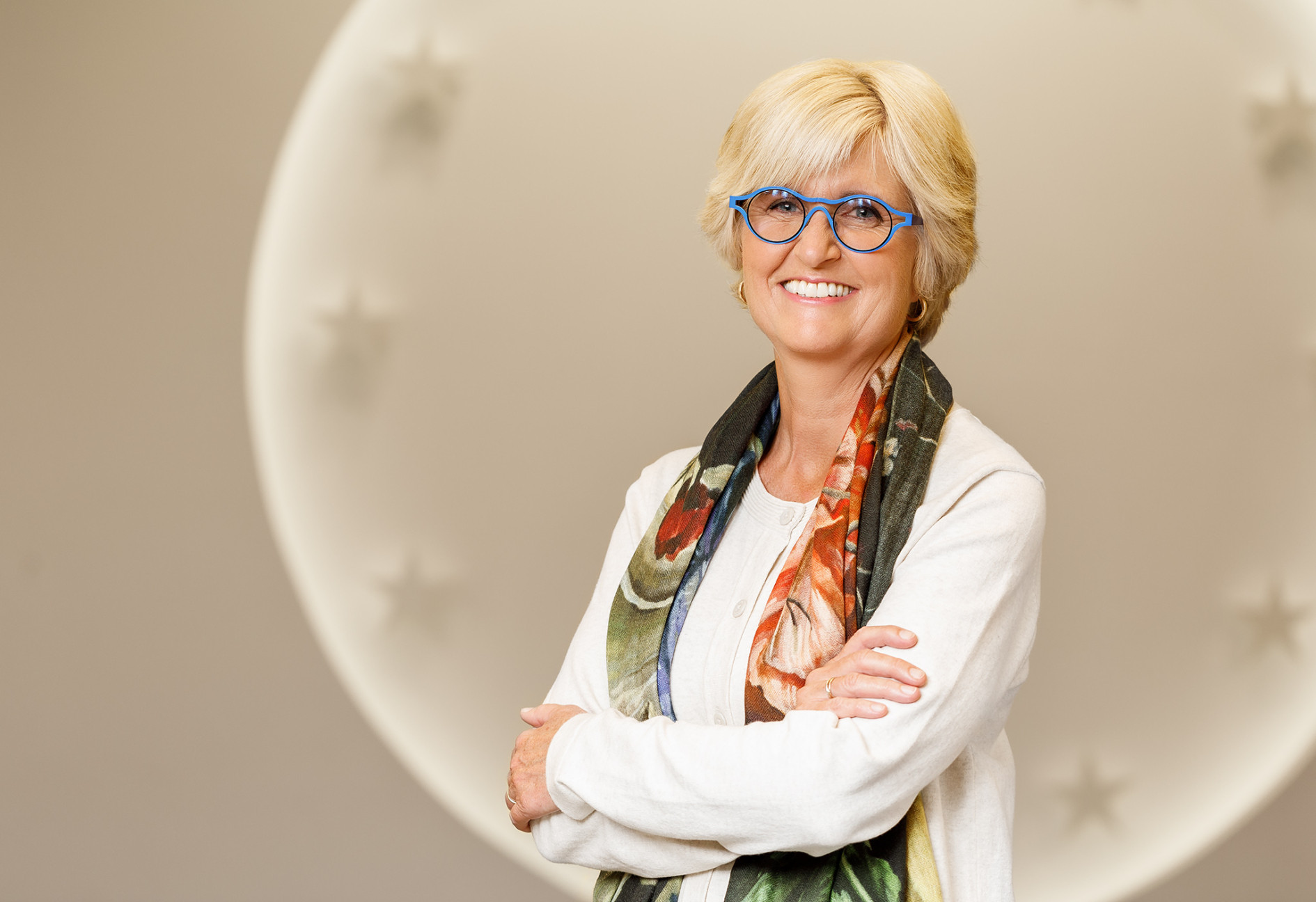
On 6 March 2026, Director Carlien Scheele speaks at a breakfast briefing at the German Permanent Representation to the EU in Brussels on technology-facilitated violence against women journalists and women in the public sphere…
Good morning colleagues,
Thank you very much for this invitation for a discussion on the nefarious impact technology can have on women journalists and women in the public sphere.
And what a week it’s been.
My agency released an analysis report to better understand the findings of the EU-Gender-based violence. And the European Commission launched their new Gender Equality Strategy.
This strategy sets an important direction from now until 2030. It recognises that gender equality is not an add on value but a pre-requisite for a resilient and inclusive Europe.
It highlights the threat of gender-based cyberviolence and how it forces women out of the online environment.
It also admits that existing power structures hold women back from full, equal and meaningful participation and leadership in politics; and that women public representatives are often the target of misogynist hate, violence and disinformation attacks.
The focus of the UN’s International Women’s Day campaign this year is on rights, justice and action. For ALL women and girls. It is a timely reminder that progress is neither automatic nor irreversible. It is a constant effort. Women in public life – from the media to politics – have always come under fire. But not quite like this moment in history.
As far as we have come in raising the profile and voices of powerful women, we are seeing diminishing democratic space in which those voices operate. The abusive and manipulative use of technology has accelerated both the reach and the intensity of attacks.
When we speak with women journalists, politicians or activists, a common thread emerges: their experience of sustained online abuse, threats that feel personal and relentless, and the constant calculation of how much exposure is safe. This is not simply the price of visibility. It is a form of silencing that affects who participates in public life and how.
When we look at the broader picture of women’s representation in politics – it matches with this ‘clipped’ visibility. Despite decades of progress, women remain significantly under-represented across decision-making structures in Europe. Today, according to my Agency’s gender-statistics database, roughly two out of every three members of national parliaments are men, and progress towards parity has slowed to a near standstill. In governments, around seven in ten senior ministers are men, and leadership of major political parties continues to be dominated by men.
In other words, women’s participation in politics is still not equal (far from it!)– and technology-facilitated violence risks widening this gap further.
Evidence on women in politics shows that online harassment is widespread and deeply consequential. A large majority of women MPs report experiencing psychological violence, and more than half have been targeted by sexist attacks online. These experiences shape political careers: women speak about withdrawing from social media, avoiding certain policy areas, or reconsidering whether to remain in public life at all.
When women step back, representation declines. And when representation declines, democracy loses legitimacy and diversity of perspective.
My Agency’s evidence also shows that technology-facilitated violence is increasingly intertwined with broader anti-democratic dynamics. Gendered disinformation and coordinated online attacks are used to delegitimise women leaders, journalists and activists, undermining trust in institutions.
Very simply, online violence becomes a structural barrier to participation.
Media freedom is also a polarising debate. When we see women journalists face continued harassment or threats, it leads to self-censorship or withdrawal from certain topics, narrowing the range of voices and perspectives available in public discourse.
The EU has recognised these risks and taken important steps. New legislative frameworks addressing online harms and gender-based violence provide a stronger basis for prevention, protection and accountability. The Gender Equality Strategy even includes a promise for a Commission Recommendation on the safety of political candidates. But as we know, the real test lies in implementation - in whether these frameworks translate into safer environments and meaningful support for those affected. And as always, political will!
From my Agency’s evidence and perspective, there are three priority areas to lock into, to turn technology-facilitated violence around.
Strong enforcement and accountability. Online abuse must be addressed quickly and effectively to ensure victims are not left navigating complex systems alone.
Institutions – from parliaments to newsrooms – need to stop the abuse from happening in the first place. Meaning: robust prevention and response mechanisms, including clear reporting channels and a culture that takes harassment seriously.
And finally, investing in data and monitoring. It is essential. Technology evolves rapidly, and our understanding of its impacts must evolve with it if we are to design effective policies that respond to the complexities of the violence women experience.
But coming back to what this is all in service of – this is ultimately about sustaining our democracies.
As we approach International Women’s Day, the message and action is simple and urgent at the same time: protect women’s participation in public life by safeguarding their rights.
If we want a public sphere that is open, inclusive and truly representative, we must ensure that women can speak, report and lead without fear - online and offline.
Thank you.


