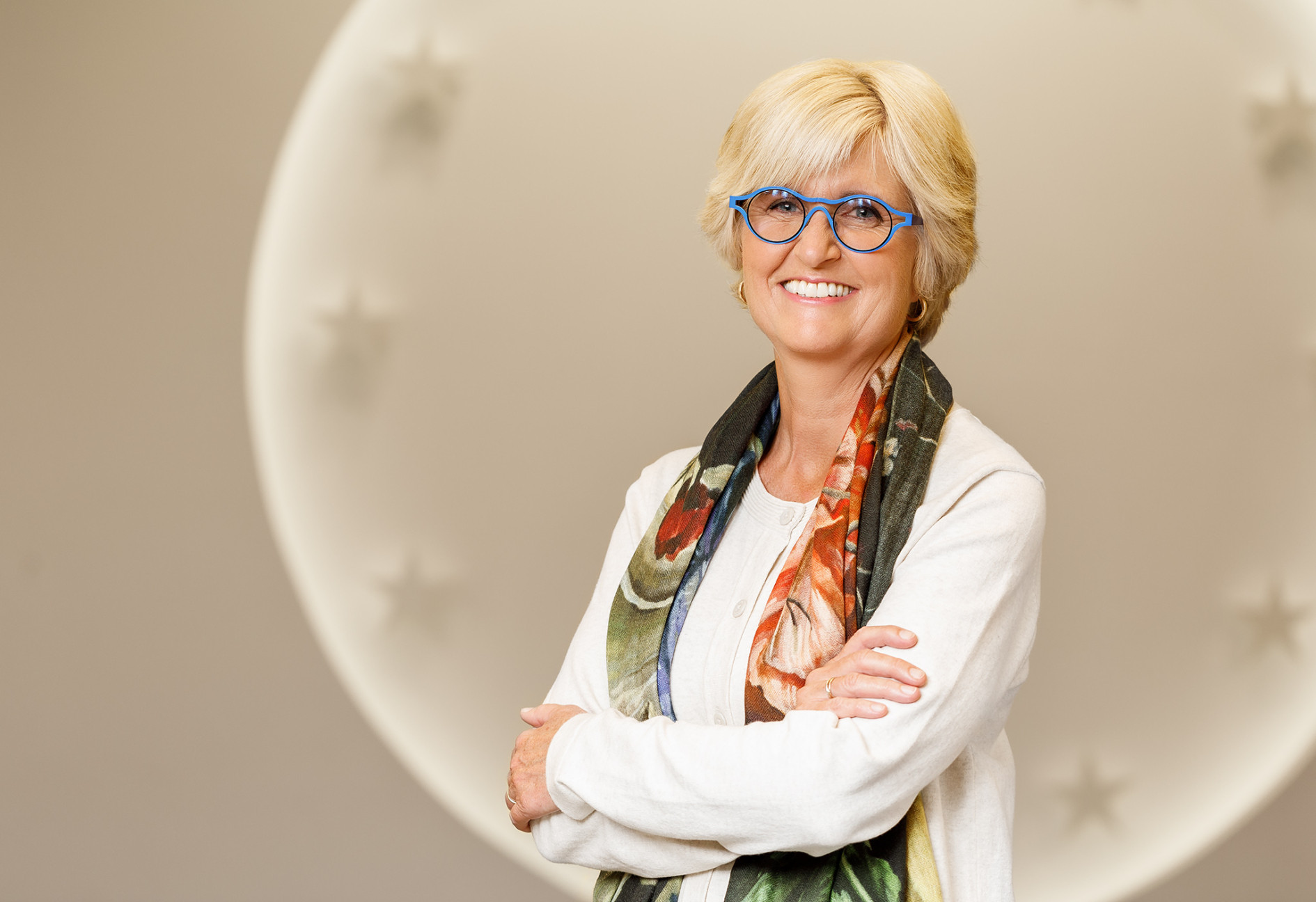
EIGE Director Carlien Scheele delivers a keynote speech at the annual European Women Rectors Association (EWORA) Conference “Women’s Leadership in Academia in Times of Rising Geopolitical Tensions on 10 June 2026 in Brussels.
President Tham, members of the European Women Rectors Association, colleagues and friends, thank you very much for this invitation.
It’s my pleasure to join and contribute to discussions on women’s leadership in academia in times of rising geopolitical tensions.
First of all, I want to acknowledge the strain academic institutions are under as they try to remain agile in the face of democratic backsliding, rapid technological change and economic uncertainty.
It’s truly a test of institutional resilience.
My Agency – the European Institute for Gender Equality – is mandated to provide the evidence, tools and data that help identify gender inequalities and, equally importantly, opportunities. Our strategic recommendations help to turn gaps into gains for gender equality across all areas of life.
Let me start by presenting the overall picture on gender equality in the European Union through our Gender Equality Index – the tool we use to measure progress across the EU and Member States.
Today, the EU stands at 63.4 points out of 100, where 100 represents full gender equality.
Over the past fifteen years, Europe has made important progress. Much of that progress has been driven by sustained political commitment, stronger legislation and more coordinated action.
The new Gender Equality Strategy 2026–2030 reinforces that direction by placing gender equality across education, work, leadership and public life at the heart of Europe’s future.
When larger crises dominate the agenda – security concerns, economic instability, geopolitical tensions – gender equality can quickly slip down the list of priorities.
And when that happens, gains that took years to build can be reversed far more quickly than they were achieved — undermining, in the process, some of the very priorities those agendas are meant to advance.
This applies across all areas of life, including the knowledge domain, which in our Index covers education, research and innovation. According to our data, it remains one of the weaker performing areas in the Gender Equality Index.
Women’s educational attainment and participation in higher education are strong across much of Europe.
Yet gender segregation continues to shape who studies what, who progresses, who leads and ultimately who helps define Europe’s future.
Women continue to be under-represented in many of the sectors that will shape our economic competitiveness and technological transition.
This is particularly visible in research, innovation, entrepreneurship and emerging technologies where the Gender Equality Strategy gives particular attention to women’s participation as a condition for Europe’s competitiveness and resilience.
But I need to stress here that the inequalities we observe here do not suddenly emerge in universities.
They begin much earlier.
Gender stereotypes still exert a powerful influence over educational choices from childhood onwards.
Girls and boys perform similarly in mathematics and science, yet this equality in performance is not reflected in participation later in life.
Institutional cultures, recruitment patterns, unequal care responsibilities and leadership pathways reinforce these differences over time.
The result is the leaky pipeline – where women are progressively driven out of their careers due to structural barriers as they ascend into seniority.
Generally speaking, our data shows that women remain under-represented in STEM fields, digital occupations, entrepreneurial ecosystems and senior academic leadership.
They continue to account for only a minority of professionals working in areas such as artificial intelligence. Women hold only 2 in 10 AI jobs in the EU. And women remain significantly under-represented among start-up founders, accounting for less than 15%, as well as in innovation teams, with only 5% of inventor teams being gender balanced.
Research is an engine for innovation.
But innovation is weakened when research draws from too narrow a pool of talent, experience and expertise.
When women are missing from research, entrepreneurship and technological development, we do not only lose representation.
We lose ideas.
We lose innovation potential.
We lose solutions.
EIGE estimates that reducing gender gaps in STEM education could contribute up to 820 billion of euros to EU GDP by 2050 and could create over 1 million of new jobs.
At a moment when Europe is investing heavily in competitiveness and innovation, we cannot afford to leave talent unused.
But we also cannot ignore the conditions that continue to drive women out.
Across Europe, women still shoulder the greater share of unpaid care responsibilities.
This affects career progression, working time and leadership opportunities.
Exclusionary cultures, unconscious gender bias and insecure career pathways continue to shape experiences within academic and research institutions.
And if we are speaking honestly about resilience, we must also speak about safety and dignity.
Gender-based violence and sexual harassment remain persistent realities in academic and research settings, and they demand not only recognition but clear institutional compliance with prevention, protection and accountability standards.
Here, too, the Gender Equality Strategy 2026–2030 offers a timely reminder: its attention to sexual harassment at work, gender-based cyberviolence and AI-related risks underlines that safe and equitable participation in knowledge spaces cannot be taken for granted.
Evidence used in EIGE’s contribution to the European Commission’s action plan for women in research, innovation and start-ups shows that women continue to experience higher levels of gender-based violence.
Sexual harassment, psychological violence and cyberviolence are not issues that can be pushed aside. They shape who takes part and who feels able to stay. And this is not only about awareness. Institutions already have clear obligations under EU law and international standards such as ILO Convention 190. That means safe reporting systems, independent procedures, proper support and real accountability.
No institution can truly claim to embody values-based leadership if researchers, students and staff have to bear the cost of hostile environments…
And there is another point I want to stress about what makes research valuable.
If we want research to reflect society, then research must study society as it is lived.
It must reflect diversity.
And it must recognise intersectionality.
Gender never operates in isolation.
Age, disability, ethnicity, migration background, sexual orientation and other factors shape access to opportunities, exposure to inequality and whose experiences become visible in research.
Inclusive and intersectional research produces stronger evidence and more effective solutions.
Universities are central to Europe’s democratic, scientific and economic future.
The European Commission’s action plan is therefore both timely and necessary.
In EIGE’s contribution, we highlight three broad priorities.
First up, we must challenge gender stereotypes early and consistently through gender-sensitive education, mentoring, making role models visible and creating inclusive learning environments.
Secondly, institutions themselves must evolve through gender equality plans, transparent recruitment and promotion systems, monitoring, accountability and gender-responsive budgeting. And this has to be backed by clear consequences, including linking EU funding to strong anti-harassment policies and practices. In other words, they have to take a long hard look at themselves.
And thirdly, we must address the structural barriers that continue to hold women back: unequal care responsibilities, funding gaps, hostile workplace cultures and emerging risks such as algorithmic bias.
This isn’t to say institutions need to start from scratch. No, because practical tools already exist.
For example, my Agency’s GEAR tool – the Gender Equality in Academia and Research – supports the development of gender equality plans. Our gender mainstreaming resources help institutions integrate gender equality into decision-making, because that is where the infrastructure for equality begins. From the top down.
But tools alone will not deliver change.
Especially if they are treated as tick-boxing exercises.
Progress will require political will and sustained action.
Academic institutions will have to confront some difficult questions if they are to take this seriously:
Who is progressing?
Who is leaving?
Who feels safe?
Whose research is funded?
Whose knowledge is recognised?
And whose voices are still missing from the room?
Universities have always been more than knowledge hubs.
They are places where futures are made possible. But those futures can only be fully realised if everyone has a place in shaping it.
So, if we want research to reflect society, our institutions must reflect society, too: places where diversity is visible, where people feel safe to contribute, challenge and lead, and where gender equality is woven into governance, leadership and everyday practice. I will not pretend that this is easy. But I will say clearly: it is necessary, and it is worth it.
Thank you.


