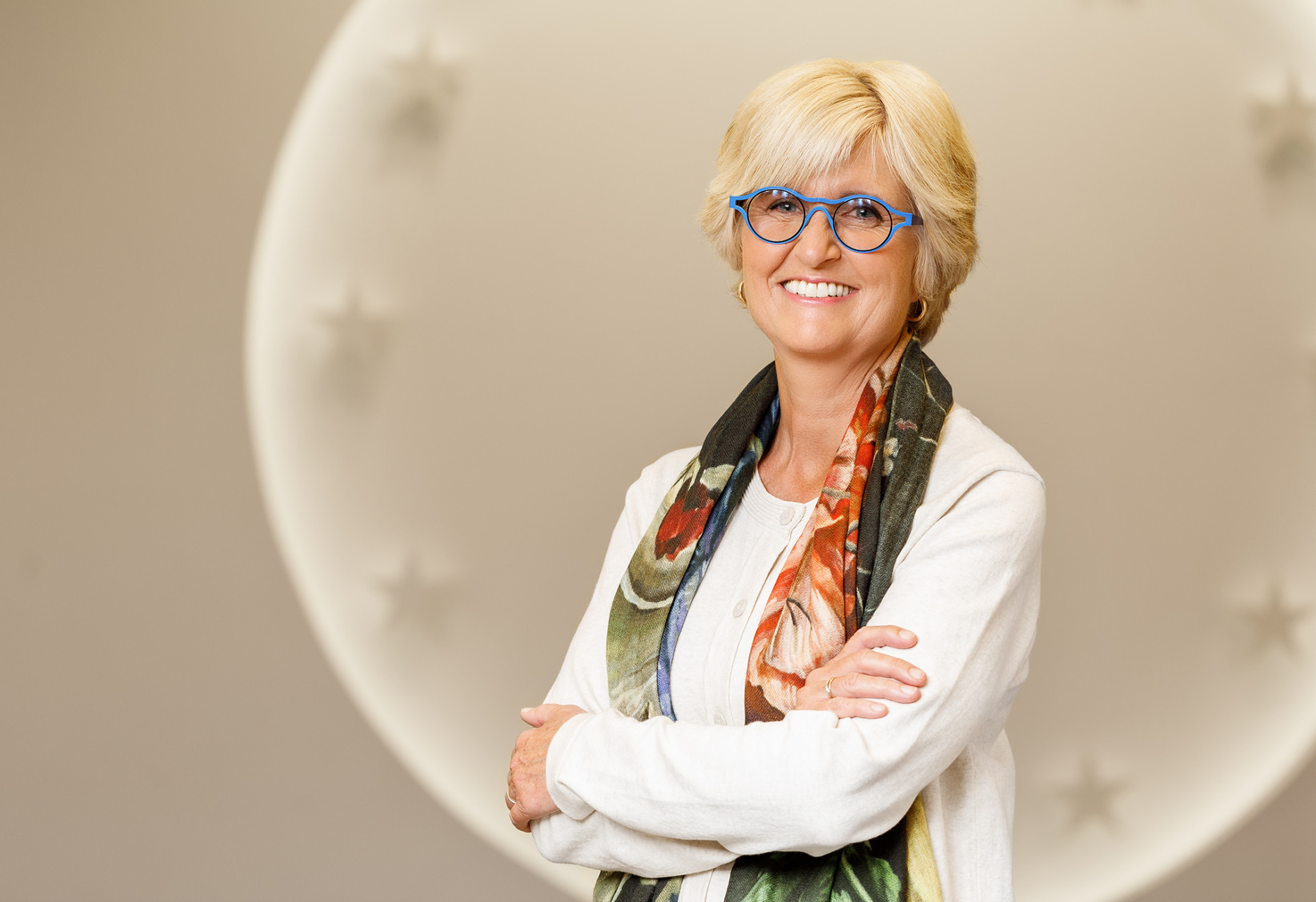
As Gender Equality Week begins in the European Parliament, EIGE Director Carlien Scheele contributes to a public hearing on disinformation campaigns and their impact on democratic resilience on 3 November 2026 organised by the Special Committee on the European Democracy Shield (EUDS).
Good morning Chair and members of the Special Committee,
It is a pleasure to join you today on behalf of EIGE, the European Union’s Agency for gender equality.
Our work looks closely at who participates in decision-making, how gender-based violence manifests, and how institutions can build gender equality into policy.
So, today’s discussion goes to the heart of our mandate: what happens to democracy when women are intimidated, discredited or pushed out of public life.
I’ve previously said in other interventions that there is no democracy without women. I reiterate that message today, not least during Gender Equality Week.
The state of our democracies is under threat. Our resilience needs a reboot and some reinvigoration.
Disinformation, public distrust and shrinking civic space are weakening its foundations. Gendered disinformation is one of the cracks we cannot afford to ignore.
And this is also a security threat. NATO warns that strategic competitors use gendered narratives in information campaigns to deepen social divisions and undermine societal resilience. By exploiting ideas about women, masculinity and gender equality, hostile actors can recruit, radicalise, legitimise violence and weaken trust in democratic institutions.
As a gender equality Agency, this is deeply concerning.
Our evidence shows that women in politics, journalism and activism are frequently targeted: Online gender-based hate speech, harassment and violence all pressure women and girls to withdraw from digital spaces or abandon careers in public life.
This is not a marginal phenomenon. The EU Agency for Fundamental Rights found that women were the main targets of online hate across all the platforms and countries it examined. Much of that hate involved abusive language, harassment and incitement to sexual violence.
Women can be made to feel there is simply no place for them online – so why even bother speaking up?
Disinformation does not just damage reputations. It narrows democratic participation and weakens trust in our institutions.
The European Digital Media Observatory confirms that this is part of a wider pattern of identity-based disinformation. It exploits existing prejudices around gender, ethnicity, religion or sexual orientation, turning identity into a fault line through which societies can be divided.
When directed at women in public life, the tactic is twofold: personalised attacks use stereotypes, false claims and sexualised imagery to delegitimise individual women, while disinformation about “gender” itself is used to create moral panic and mobilise opposition to equality.
Let me be clear. Women’s equal participation in decision-making - including in our parliaments - is vital for democracy. Yet across the EU, progress in political representation is stalling, and in some cases reversing.
After the 2024 European elections, our evidence found that women held 38.8% of seats in this Parliament, which was down from 40.7% in 2019. We have gone backwards.
Across national parliaments, only one in three members is a woman. Also, not promising.
I welcome the Committee’s findings for recognising this threat directly. And that you condemn disinformation campaigns – including deepfakes and non-consensual sexual content – targeting women candidates and call for measures to counter them.
So, what should we do? First, build gender into democratic resilience from the start.
Threat monitoring, election preparedness and rapid-response systems must detect gendered narratives and their links to racism and other discrimination. Gender-blind tools leave part of the threat invisible.
Second, make digital spaces safer and hold platforms accountable.
Enforce the Digital Services Act alongside the Directive on violence against women. Platforms need transparent risk assessments, accessible complaints, and swift action against abuse, deepfakes and impersonation.
Third, protect women in public life.
Women politicians, journalists, activists and human rights defenders need clear reporting routes and practical support. Electoral bodies should monitor violence against women, while political institutions enforce robust anti-harassment policies.
We must not only bring more women into public life, but ensure they can stay and speak up.
Finally, invest in long-term resilience.
Media and digital literacy help people recognise disinformation and understand how AI can amplify falsehoods, fuel polarisation and accelerate radicalisation.
We also need to engage young people directly, because misogynistic online cultures can become gateways for polarisation and radicalisation. These online spaces like the manosphere, can be so attractive at first sight. Although self-development is the main focus – underneath it are aggressive ideas about women. Repeated and reinforced. You all know how powerful compelling narratives are.
Gendered disinformation wants us to believe women should stay out of public life – that they have no rightful place there.
But democracy belongs to everyone.
Democracy does not exist without women – and that very much includes women in public life.
Thank you.