
EIGE’s travelling exhibition shows how employers and trade unions can respond to it.
Violence against women affects women's safety, wellbeing and economic independence, including their ability to participate in working life.
EIGE's traveling poster exhibition shows how employers can help prevent violence, support those affected and create safer workplaces across Europe.
Would you like to bring the exhibition to your workplace in 2027?
Violence does not clock out
Evidence that raises awareness. Examples that inspire action.
Launched at the Gender Equality Forum 2026, EIGE’s travelling exhibition “Violence does not clock out” shows why violence against women demands a workplace response and spotlights practical action already making a difference.
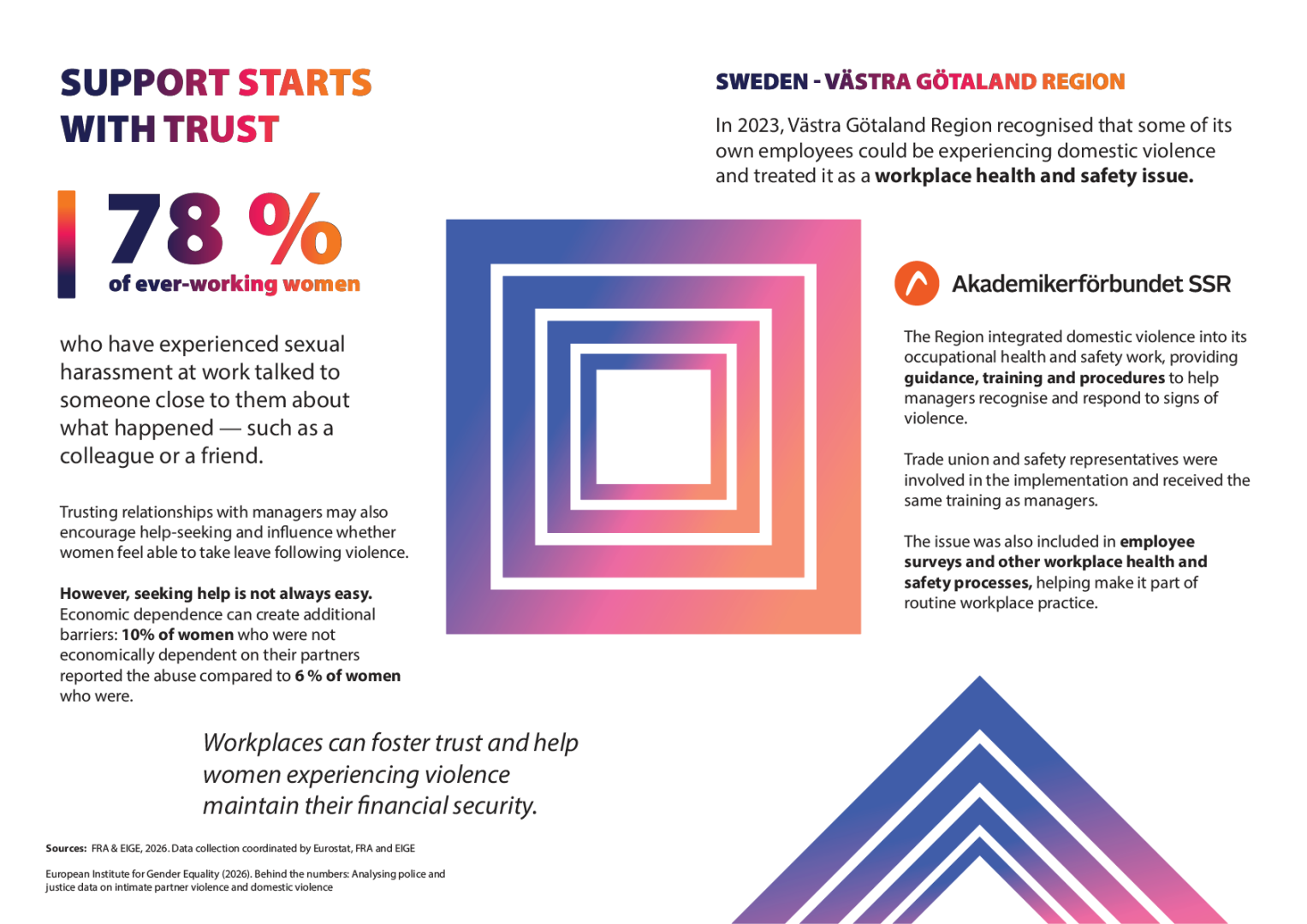
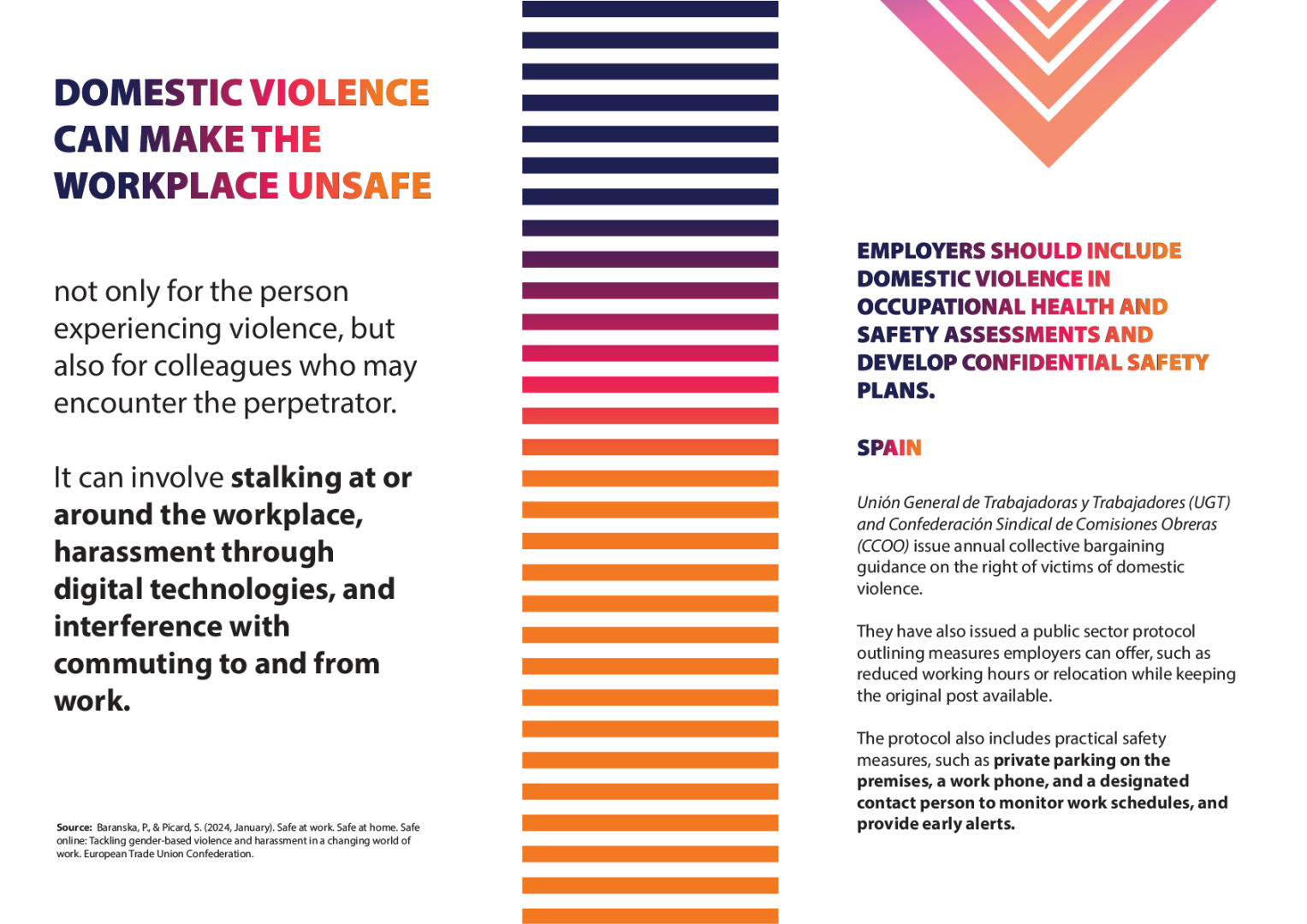
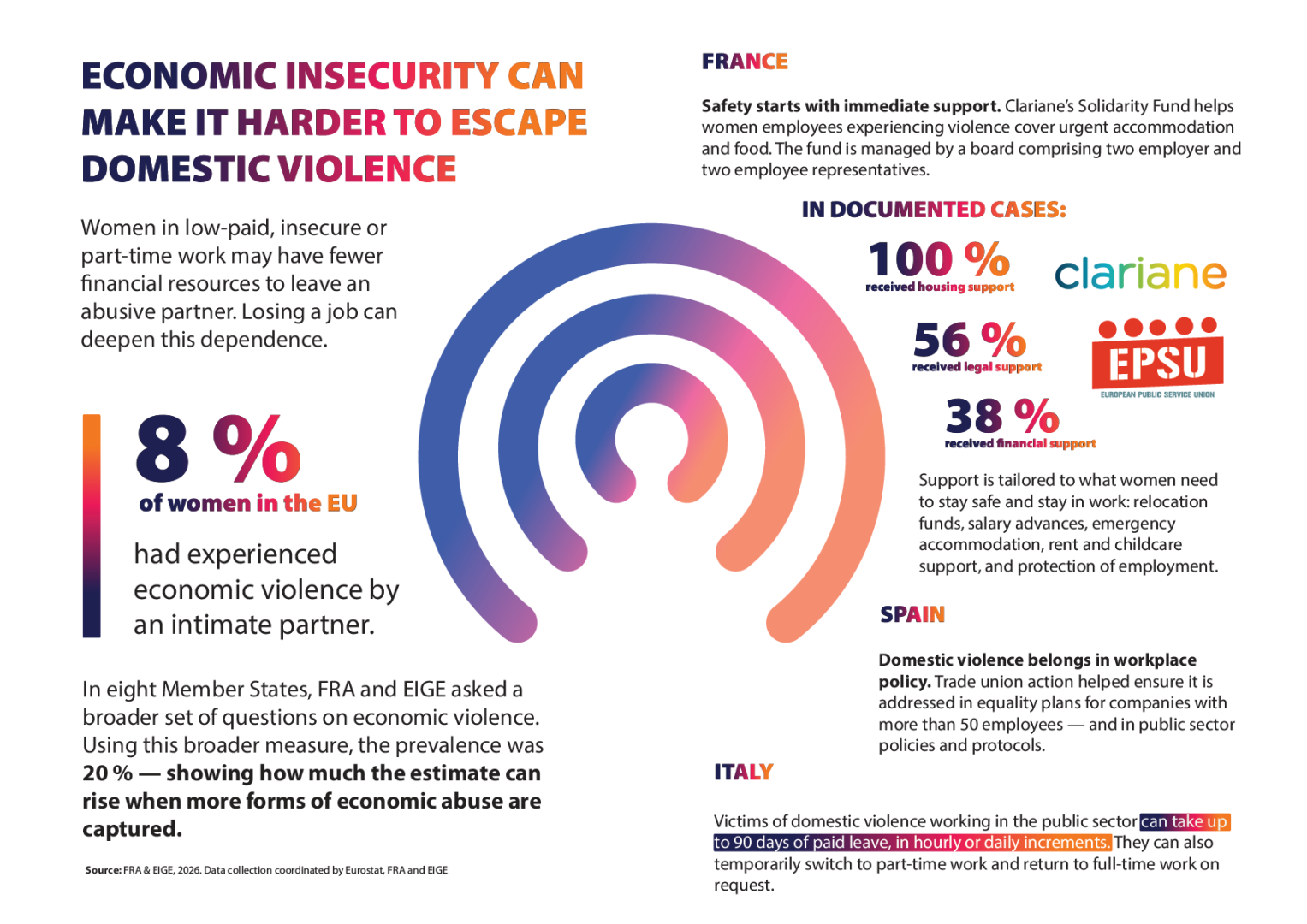
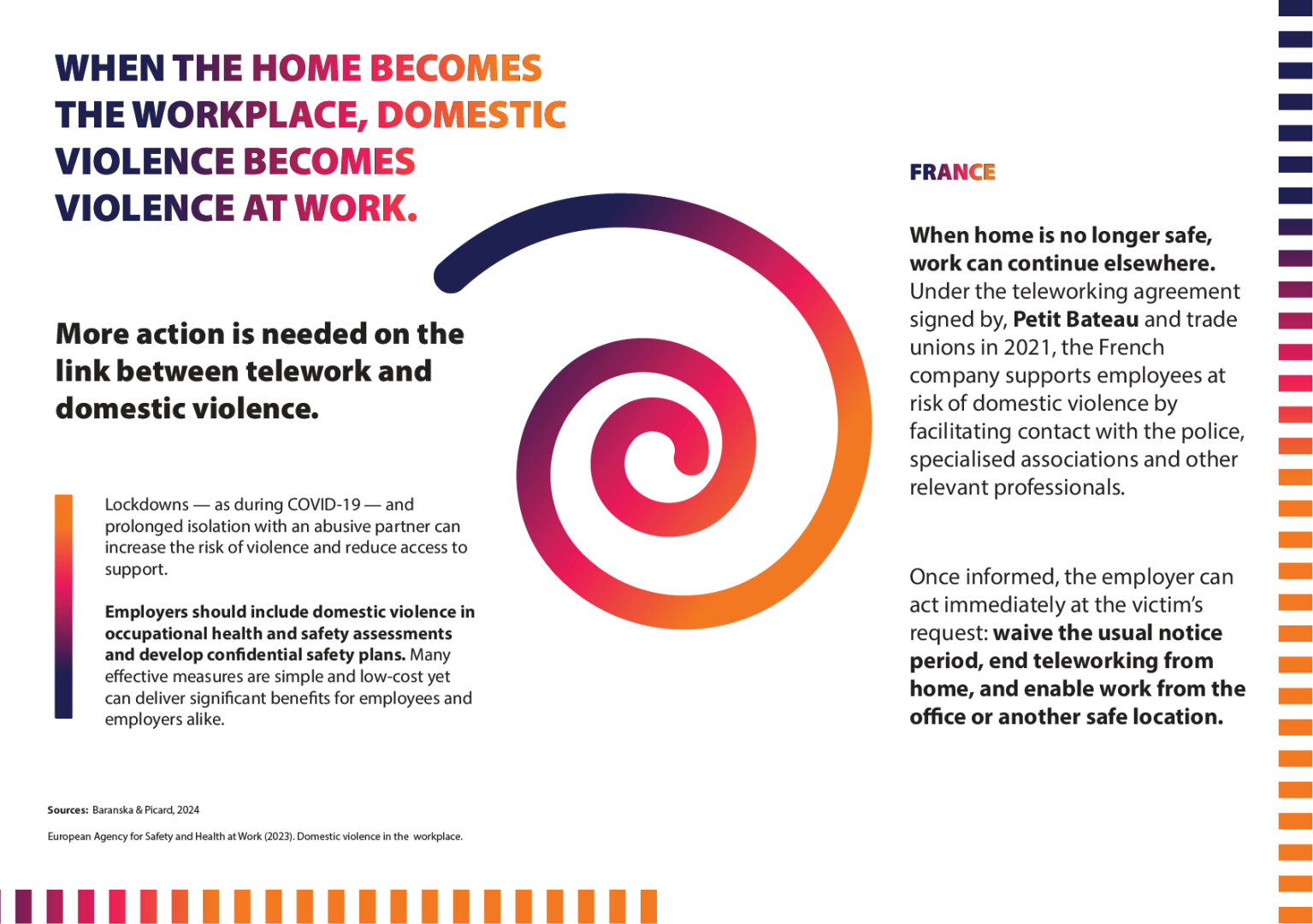
The travelling poster exhibition combines evidence from the EU gender-based violence survey with concrete examples of measures taken by employers and trade unions. It shows how violence against women affects safety, wellbeing, labour-market participation, productivity and economic independence.
Designed with the European Public Service Union [EPSU], the poster exhibition highlights support measures negotiated, adopted and implemented by employers in close cooperation with local and sectoral trade unions to support women experiencing violence. It thus demonstrates the role businesses and organisations can play in preventing and addressing, not only gender-based violence at work but also partner violence.
Conceived from the outset as a travelling exhibition, it will move from the Forum to other organisations and EIGE encourages institutions and employer-focused organisations to consider hosting the exhibition throughout 2027.
Why recognising violence against women as a workplace issue matters
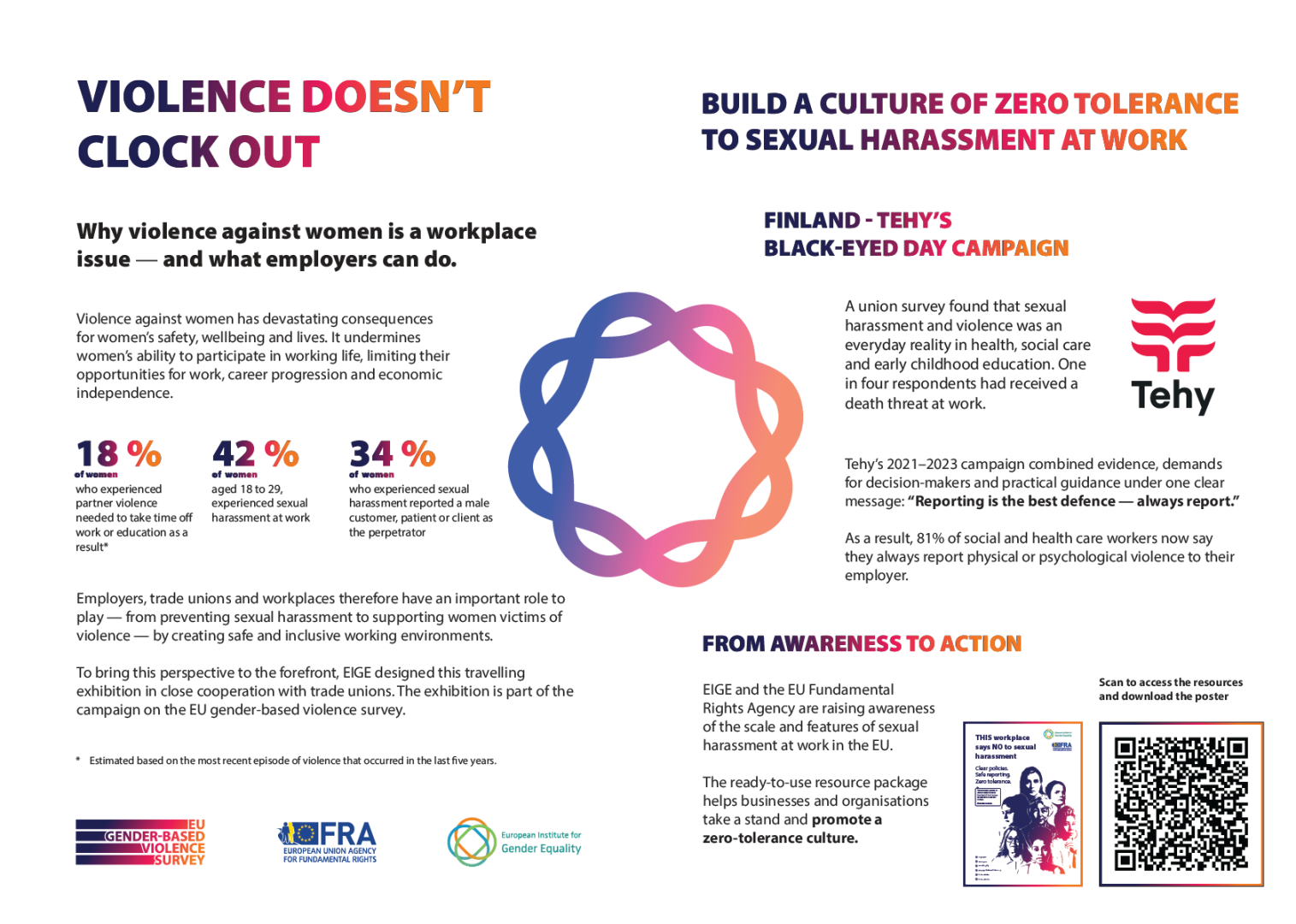
Violence against women has devastating consequences for women’s safety, wellbeing and lives. It limits women’s opportunities to work, progress in their careers and remain economically independent.
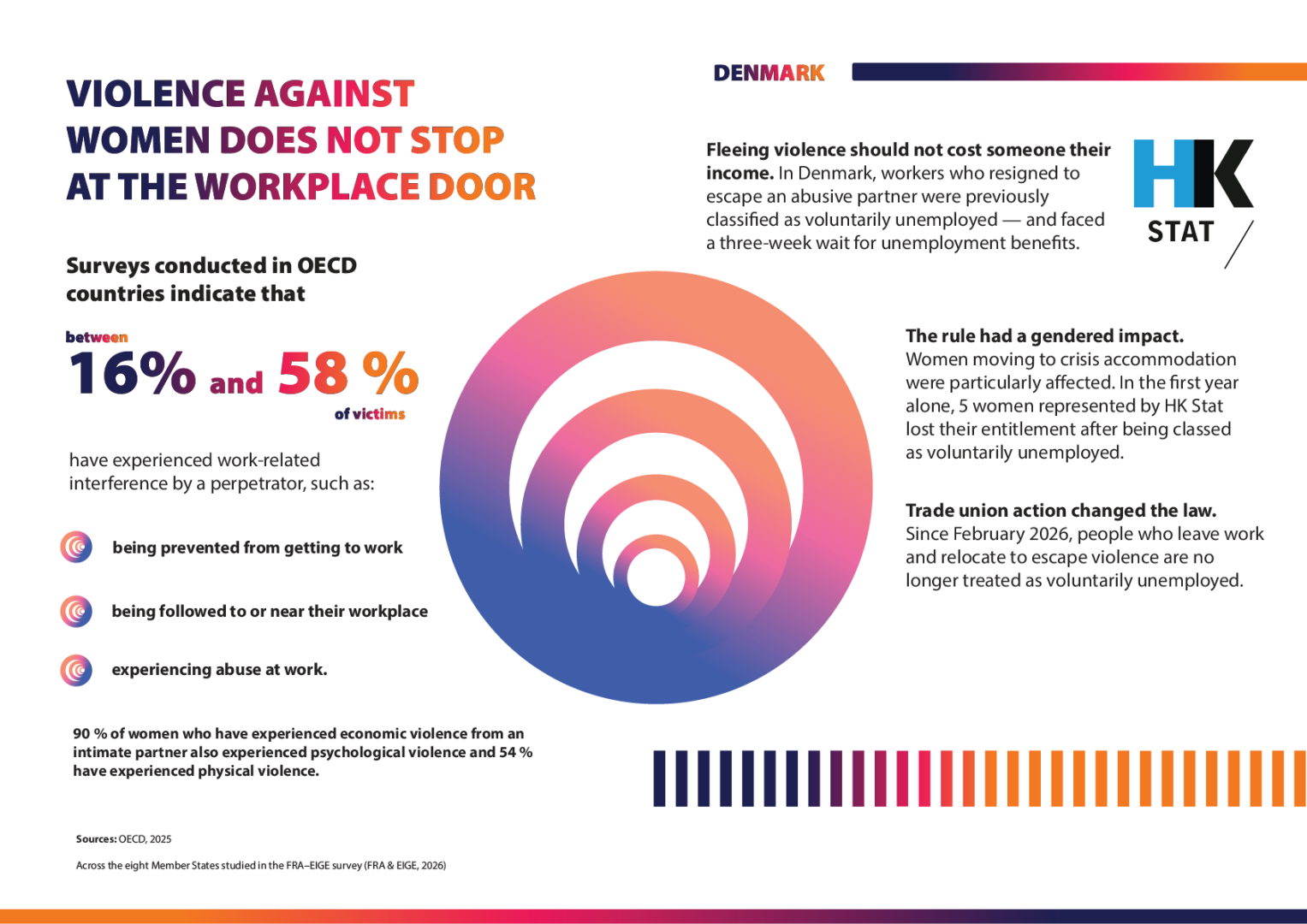
Violence against women does not stop at the workplace door. Sexual harassment, as well as intimate partner violence disrupt women's lives, limit their opportunities and affect their ability to thrive professionally. Workplaces must be part of the solution, ensuring that every woman can work with dignity and without fear.
Carlien Scheele, EIGE Director
-
31%
of women experienced violence during their lifetime1 -
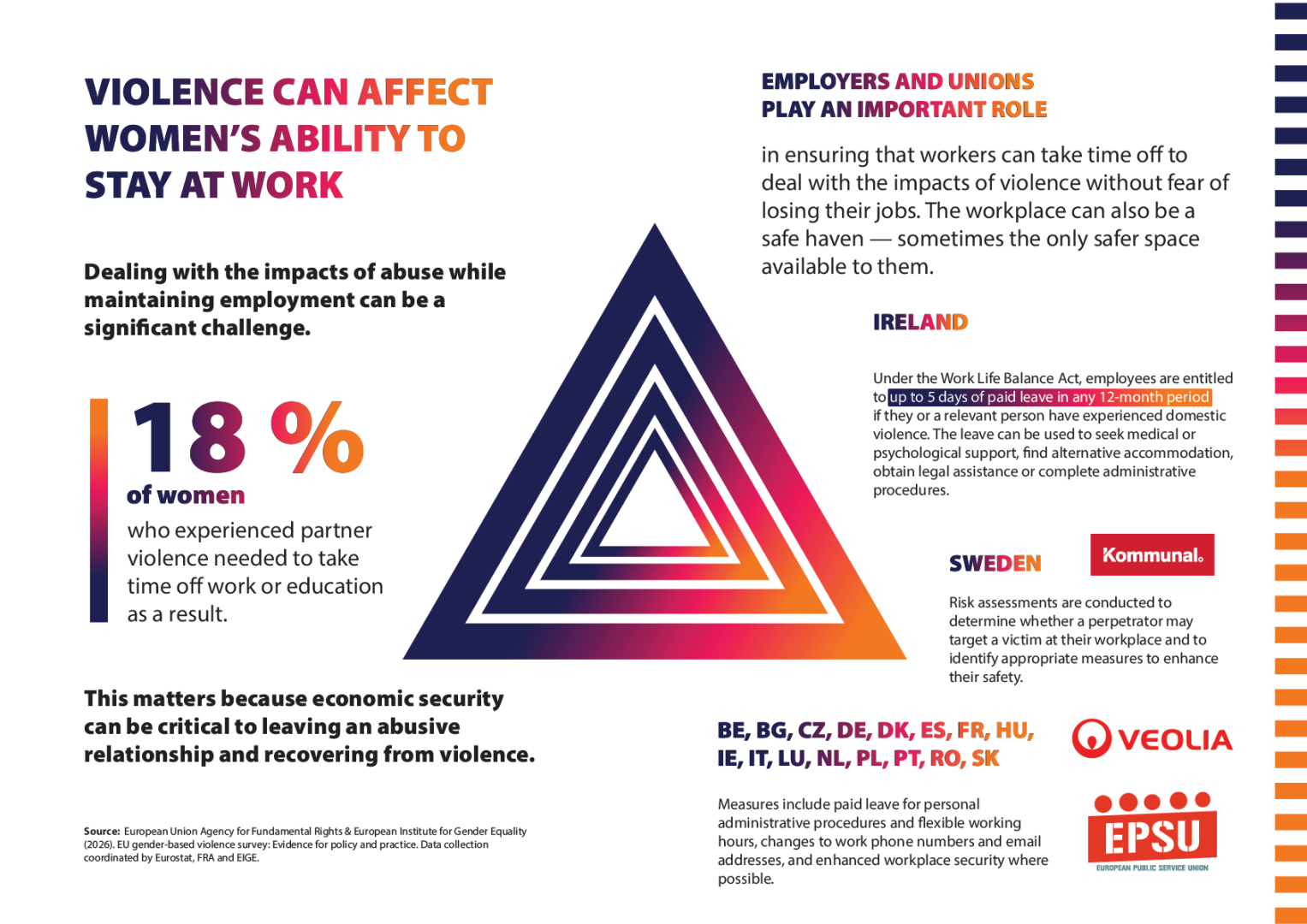
18%
of women who experienced partner violence needed to take time off work or education as a result1 -
42%
of women aged 18-29 have experienced sexual harassment at work1 -
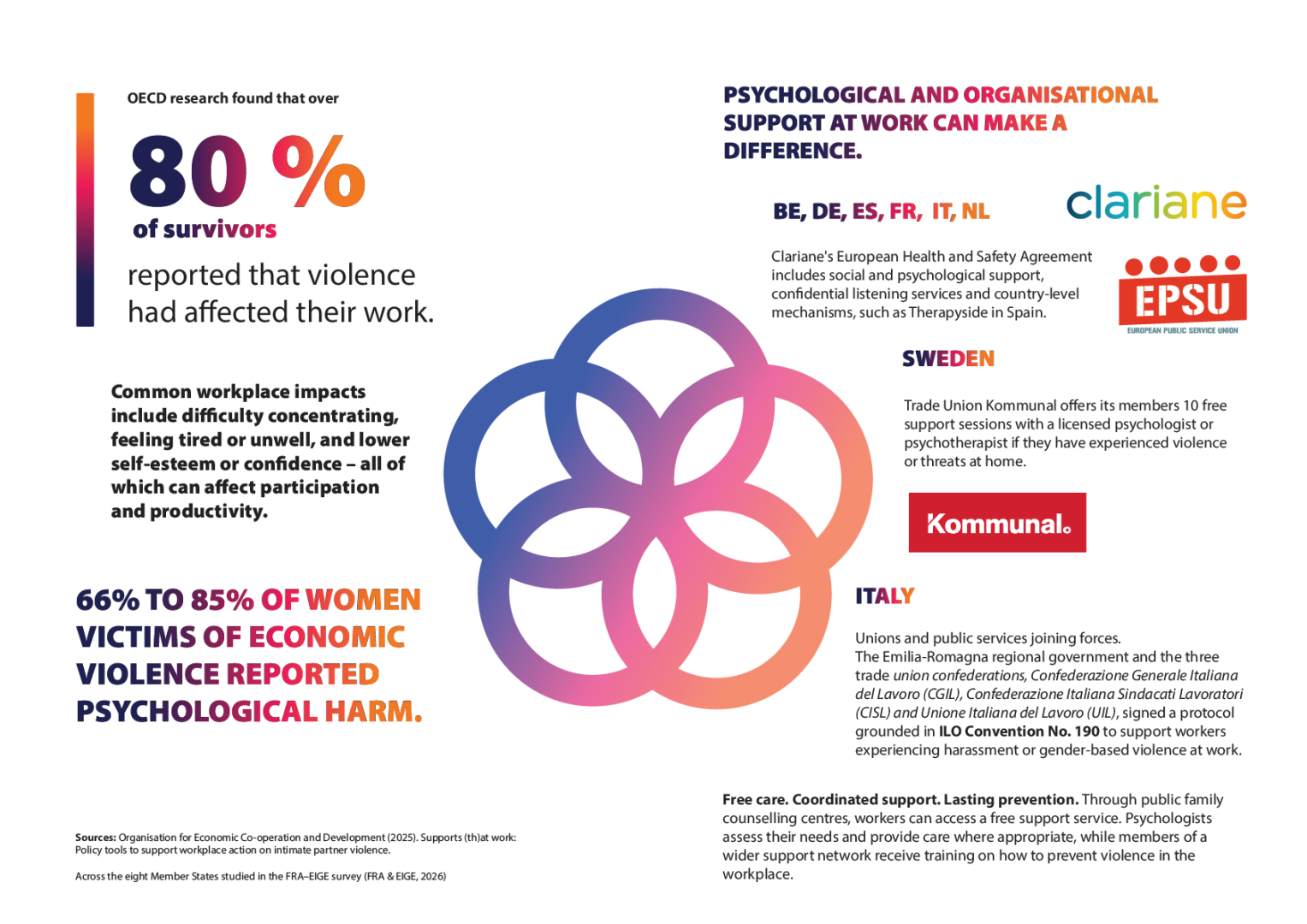
Over
80%
of survivors report that the violence had affected their job2
Recognising violence against women as a workplace issue means taking action both at work, to address sexual harassment at work, and when violence occurs at home. Workplaces can offer safety, stability and support, helping women remain in employment and maintain their economic independence.
Beyond protecting women’s safety and wellbeing, addressing violence against women is also smart economics: removing a major barrier to women’s labour-market participation supports business productivity and helps Europe realise its full economic potential.
EIGE has estimated that the cost of gender-based violence across the EU is €366 billion a year. Intimate partner violence makes up 48% of the cost of gender-based violence, amounting to €174 billion a year.
Bring the exhibition to your workplace.
Interested in hosting the exhibition in 2027? Contact EIGE to learn what the exhibition includes, what hosting requires and when it is available.
Help turn awareness into action.
1 First three proof points: European Union Agency for Fundamental Rights & European Institute for Gender Equality (2026). EU gender-based violence survey: Evidence for policy and practice. Data collection coordinated by Eurostat, FRA and EIGE.
2 Fourth proof point: Organisation for Economic Co-operation and Development (2025). Supports (th)at work: Policy tools to support workplace action on intimate partner violence.