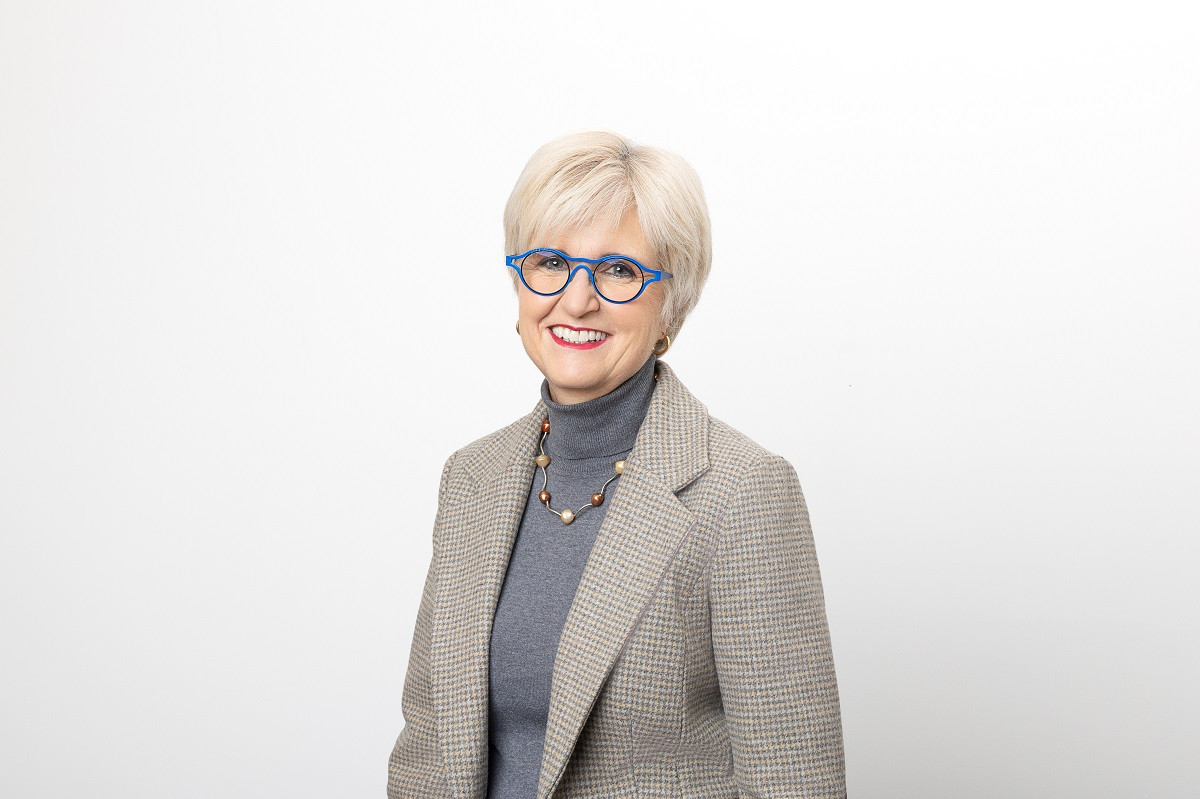
Director Carlien Scheele unpacked the Gender Equality Index 2025 results to the FEMM Committee in European Parliament on 2 December 2025. With an updated methodology, new data, new sources, we have a brand-new baseline for understanding gender equality in the EU…
Good afternoon chair and members of the FEMM Committee,
I have the privilege to share with you the fresh findings from the 2025 Gender Equality Index.
It’s a very significant year for the history of my Agency’s Index.
As you all know, the Index helps policymakers track and improve gender equality across the EU. We do this by providing a detailed understanding of where gender gaps exist across six dimensions of our daily lives: Work, money, knowledge, time, power and health.
But you all know that we are living in a world that is changing at extraordinary speed. We realised that our data needed to capture what gender equality looks like now, not five or 10 years ago.
So, after extensive consultations with our stakeholders, we have new indicators, new data sources and now, a new baseline for measuring progress.
Europe is undergoing a profound digital transformation. Our societies, our economies - and the inequalities within them - are being reshaped.
That is why the 2025 Index introduces, for the first time, indicators that help us better reflect digitalisation. This responds directly to a clear policy need: understanding how digital transitions interact with gender roles, opportunities, and barriers.
Another new feature is that we look at intensity of care now. Men are slowly catching up with care duties, but when it comes to the number of hours engaged in care - gender gaps remain very large.
The third novel addition to our Index update is that we give greater visibility to certain groups who suffer the most from inequalities, like older people and single parents.
And finally, we also look at low paid, precarious jobs in the context of fast evolving labour markets.
We have moved toward individual income indicators, to measure more precisely than before, women’s and men’s access to financial resources - not just at the household level.
All together, our revamped methodology offers a sharper lens through which to understand the state of gender equality.
And now for the big picture.
Despite progress in some areas, gender equality in the EU is still advancing far too slowly. Time inequality remains stubborn. Gaps in pay, income, and financial independence persist. Power imbalances endure. Even in high-performing domains like health, progress has flatlined.
And this year’s Index also puts gender stereotypes under the spotlight – because they continue to hold a very firm grip on how we shape our choices, expectations and behaviours. But we also see that where policies challenge these stereotypes directly, change is possible
So, where do we stand today?
The EU’s average score is 63.4 out of 100. We have made a 10.5 stride over the past 10 years. At this pace, full gender equality is still over 50 years away.
Scores vary widely across Member States - from the mid-40s to above 70.
Sweden, France, and Denmark lead the way, showing what sustained commitment can achieve – but that it can never be taken as a continuous given. Progress requires constant effort and investment.
Countries like Malta, Ireland, and Lithuania have made significant strides, while others have stagnated or even regressed. What this says very clearly is that efforts and investments pay off and that strategies for gender equality must be tailored to reflect different national realities.
Now I will dive into the different areas of life we cover, for a comprehensive understanding of gender equality.
- Health scores high at 86.2, but progress has flatlined since 2020.
- Power remains the lowest at 40.5, despite being the fastest-improving domain, thanks to gains in women’s participation in decision-making.
- Money ranks second at 73.9, yet gender gaps in earnings and pensions persist. Women earn 77% of men’s annual earnings, and the gender pension gap stands at 25%. This reality has created what’s known as the ‘Ghost quarter’ – the three months and 18-day period per year where women are working for free – and I am sure no one would disagree that this is totally unfair.
- Time scores 65.0, revealing persistent inequalities in unpaid care and domestic chores. Women still shoulder the bulk of childcare and household tasks, limiting their economic opportunities and personal time.
The unequal sharing of care responsibilities remains a major driver of gender inequality. Even though we know men are taking on a greater share of the load, they are not in terms of the intensity. We all know that picking up a child from school is very different to taking care of a sick child at home.
In the EU:
- 41% of mothers with young children spend at least 35+ hours per week on childcare, compared to 20% of fathers.
- And nearly two in three women do household chores daily, versus one in three men.
These patterns restrict women’s ability to work, earn, and save - impacting their financial security across their life course.
And it comes down to stagnating segregation…
Even though women outperform men in education overall:
- Women are four times more likely to study education, health, and social welfare.
- Only 34% of STEM graduates are women.
- In the labour market, just 20% of ICT specialists are women.
This digital gender divide is structural. And it has long-term knock-on effects like:
- Stunted career progression
- Widening wage gaps
- Hampering economic independence
Without addressing these structural barriers, gender equality will remain out of reach.
Not only has the score for tackling segregation in education risen by just 3.5 points in 15 years, but it has been at a virtual standstill since 2015. At this pace, it will take at least 200 years to achieve gender equality in subject choices free from prejudices and stereotypes.
So what these findings alert us to, is that progress depends on sustained commitment and bold action.
Gender equality is only as inevitable as the consistency of political will, resources, and accountability.
As I come to a close, I want to remind you all that our Gender Equality Index is not just a scoreboard for countries to pit against each other. Yes, we all like to play the comparison game - it’s hard to resist - but remember that that the Index is a robust roadmap for policy action impact.
Our evidence pins down exactly where attention is needed the most. And it provides strategic recommendations for how to accelerate the progress we need to fully realise the benefits of gender equality.
Thank you.