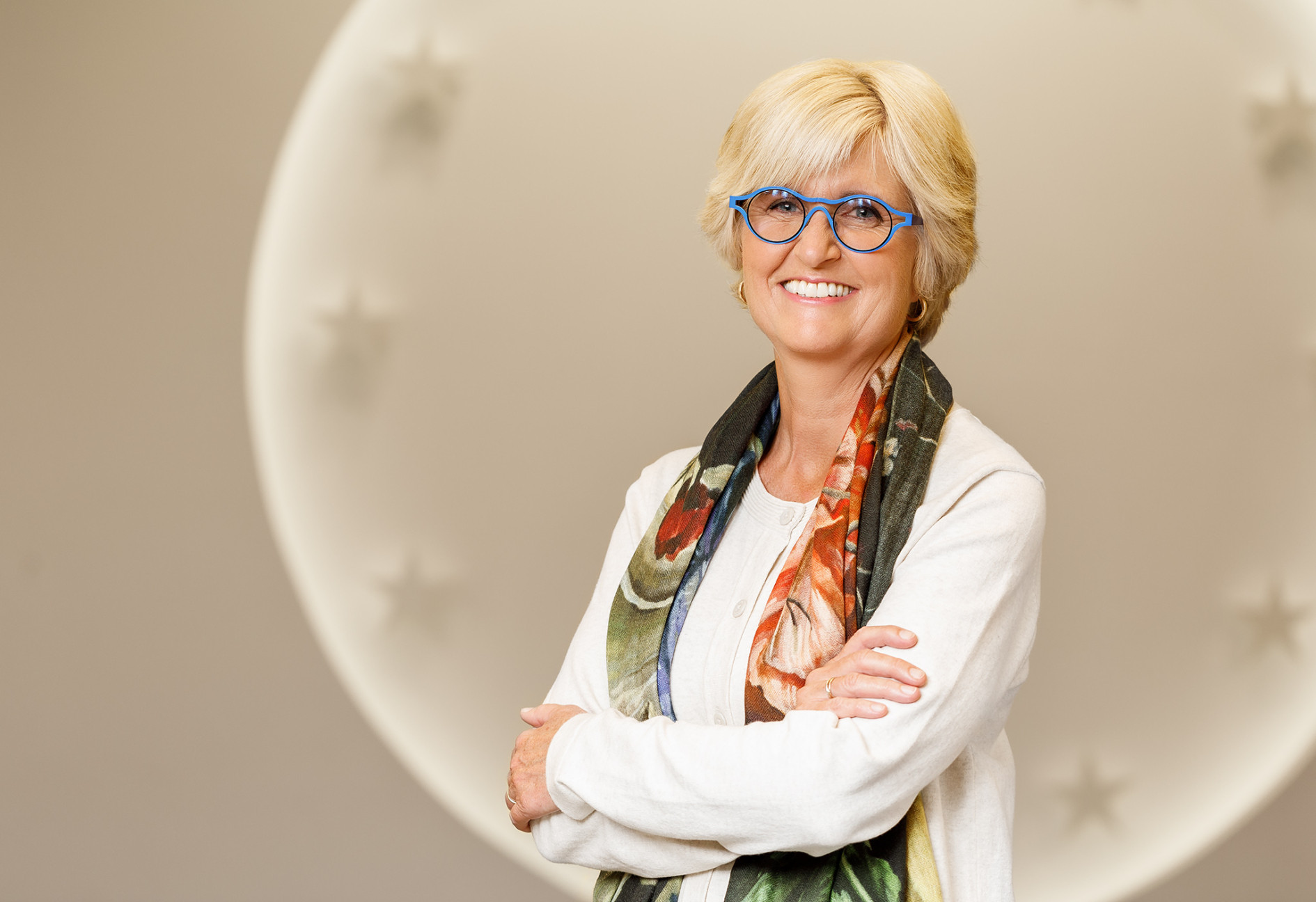
EIGE Director Carlien Scheele attends a high-level conference in Dublin under Irish Presidency of the Council of the EU on 9 September 2026 to inaugurate the Agency’s campaign on gender equality and competitiveness. She sets out how closing gender gaps in care, skills, investment and leadership and embedding gender equality across policymaking – can drive sustainable growth across Europe.
Dear Minister, dear colleagues and dear friends,
It is a great pleasure to be with you in Dublin today. And it’s an honour that EIGE is part of a conference which is asking one of the defining questions for Europe’s future: can Europe become more competitive by upholding its values of gender equality and human rights?
This is also the perfect moment to inaugurate EIGE’s latest campaign on gender equality and competitiveness, running until the end of 2027.
We have paired these two themes because their relationship is still underestimated politically and not yet widely understood publicly – even though the EU Gender Equality Strategy 2026–2030 names gender equality as a driver of growth.
I’d like to add that our evidence shows that it is a driver of wellbeing and prosperity as well as sustainable growth. That is what makes gender equality and competitiveness such a compelling pairing.
According to our data, closing gender gaps could increase EU GDP per capita by up to 10% by 2050, create around 10.5 million additional quality jobs, and generate economic gains worth more than €3 trillion.
At a time when Europe is focused on productivity, innovation and resilience, we cannot afford to overlook a simple reality: every gender gap is also an economic gap.
And to fine-tune this point further, The Draghi report called for new sources of growth to strengthen Europe’s competitiveness. I quote: “Europe now faces three major transformations, the first of which is the need to accelerate innovation and find new growth engines.”
Our campaign explores five areas where gender equality becomes an economic advantage: care, skills, investment, leadership and gender mainstreaming.
I’ll start with care.
We all give or receive care at some point in our lives.
But care is still too often treated as a private responsibility, rather than the essential infrastructure that allows people to work, for businesses to retain talent and for economies to grow.
Across the EU, 36% of women spend more than 35 hours a week caring for children, compared to 18% of men.
When work and care collide, it is most often women who cut their hours, pause their careers or leave the labour market altogether.
Here’s some more evidence for you: 12% of women caring for children left employment because of care responsibilities, compared with less than 5% of men.
When care is shared, and backed by services families can find and afford, parents get a fair chance to work and earn, children get quality early years education, and businesses benefit from employees who stay longer and perform better.
That is why care is not an issue we can put to one side. It is part of Europe’s growth strategy. According to Eurofound’s data, the gender employment gap alone cost the EU economy around €390 billion in foregone output in 2023. And every euro of public spending on social infrastructure can generate up to €2 in cumulative GDP gains over five years, while drawing in an estimated €1.30 in additional private investment.
The second area is skills.
Getting women into work is only the beginning. Growth happens when skills rise to meet what the economy needs. And Europe’s most pressing skills shortages are gendered.
Yet we continue to leave enormous talent untapped.
The innovation revolution Europe needs will be built by people with the right technical, social, creative and problem-solving skills.
Yet women hold just around 20% of ICT jobs, even as demand grows fastest in that sector.
And EIGE’s evidence reveals that closing gender gaps in STEM alone could add up to 3% to EU GDP per capita and as many as 1.2 million jobs by 2050.
And I stress here that this is not about quotas. It is about ensuring that talent, not gender stereotypes, determines opportunity.
Moving onto the third area – and that is investment.
Women are building fast-growing businesses and driving innovation across Europe. Yet, across Europe, fewer than one in four deep tech startups have a woman in the founding team, and all-women founding teams attract barely 2% of early-stage venture capital funding.
If I ask you to picture a typical candidate who receives venture capital to build up a business and drive innovation – I would guess that the image of a man pops up in your mind. And that’s because of engrained gender stereotyping. None of us are above snap gender biases.
Here we are not just talking about a funding gap, we are also dealing with a growth gap.
If women’s ideas are under-financed, Europe loses out on the innovation that can strengthen its competitiveness.
The fourth area is leadership.
Decision-makers matter. Women now hold around a third of board seats in the EU’s largest listed companies, but they remain less than a fifth of executive directors and fewer than one in ten CEOs.
Getting more women into the board room is not the be all and end all.
A competitive Europe needs gender equality in the rooms where priorities are chosen, where budgets are set and where decisions are made.
And finally, gender mainstreaming is the glue that pieces all this together.
Care lets people work. Skills put talent to use. Investment backs ideas. Leadership turns potential into decisions. But Europe only gets the full benefit when gender equality is built into every policy area, every budget line and every impact assessment.
Moving into the future now, we’re taking these important conversations and platforming them during our Gender Equality Forum on 17 November, in Brussels and online.
Our programme revolves around ‘Driving Europe’s growth through gender equality’. As usual, we will have a range of diverse voices at the table: policy makers, civil society, business leaders, employers and young professionals sharing their concrete ideas on how to challenge the barriers that remain, for true and long-lasting change.
So, to close, in a few concrete words:
Evidence gives way for action. Data is a pathway for policies.
Europe already has a hidden engine for growth: the talent, labour, care, leadership and creativity of women and men in all their diversity. But that engine cannot run at full power while gender gaps remain.
Europe grows stronger and goes further, when everyone can contribute their fullest potential and benefit from that progress – both on an economic and social inclusion level.
Thank you very much and I wish you an inspiring conference!


