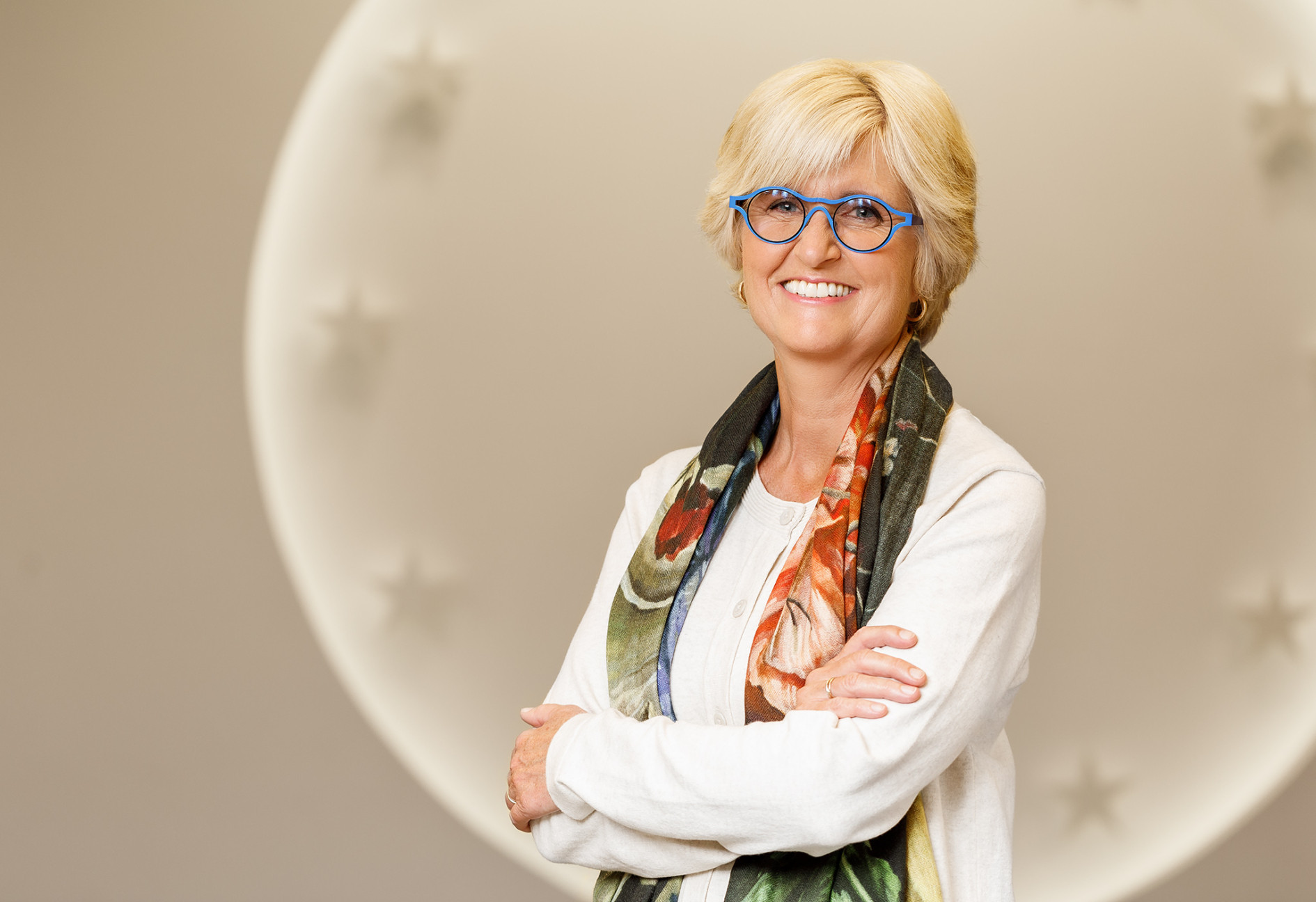
EIGE Director Carlien Scheele delivers the keynote speech at the conference ‘The Women on Boards Directive – Status & Impact across Europe’ organised by European Women on Boards in Brussels on 11 June.
Good afternoon and thank you for the opportunity to celebrate with all of you a Directive that took more than a decade to become reality.
A decade of negotiations. A decade of debate. A decade of being told that change would come eventually.
And yet here we are.
For too long, women have had to wait.
Wait for the next appointment round.
Wait for workplace cultures to catch up.
Wait for merit to somehow find its way through structures that were systemically designed to not be equal.
But Europe has shown something important:
Progress does not only happen because time passes.
Progress happens when rules become clear.
When accountability becomes visible.
And that is precisely what the Women on Boards Directive has done.
At the European Institute for Gender Equality, we often say: What gets measured gets done. But now we can take that one step further and say: what gets regulated, can finally change…
Before I dip into decision-making data, here’s a wide-angle view on the state of gender equality in the EU and the Member States. What you see are the figures from our Gender Equality Index which measures the state of progress on gender equality – 100 points represents full gender equality. As you can see, no country sits close.
My Agency’s role in this journey is practical and essential: we support the European Commission and the Member States with robust, comparable EU-wide evidence on who holds decision-making power – in business, in finance and in politics. We monitor trends, we explain what they mean, and we publish the data openly and regularly through our Gender Statistics Database.
We help Europe understand what is changing – and what still refuses to change.
So what does the latest evidence tell us as we approach the Directive’s 30 June compliance targets?
The latest evidence tells us two stories at once – which is very typical when it comes to revealing data.
Firstly, Europe is close – but not close enough.
Since October 2025, women have accounted for just under 40% of non-executive directors in the EU’s largest listed companies – putting the target firmly within reach. And across all board roles, women now hold around one third of seats, which means the overall target has already been achieved.
But as always, this headline picture hides some hard truths.
The closer we move toward the centre of power, the fewer women we find.
Women still hold less than a fifth of executive director positions. And at the very top, the imbalance is quite stark: women are only just over 10.0% of board chairs and just under 10% of CEOs. What this indicates very concretely is that we are nowhere near the finishing line – if anything this data is a firm and unfriendly reminder that while doors are opening, the highest seats at the table remain disproportionately occupied by men.
Nevertheless, the evidence still gives us reason to hold onto optimism.
Because this progress did not emerge by chance.
It emerged through policy.
Our data shows that one year after the transposition deadline, 18 Member States have transposed the Directive, while in seven, laws are still in draft or finalising form, and two reported no measures.
Where measures are in place and enforced, more companies reach the targets. Where the framework is missing, progress is slower.
At this point I want to pause on the pessimism and turn to a positive that should encourage us to keep moving forward with momentum.
Let’s not forget that the Directive is a turning point - not yet another compliance exercise.
So here are three essential actions to pay attention to.
Firstly, we have got to keep pushing beyond the non-executive layer. Real power is not only on the board; it is in executive roles, in CEO pipelines, and in who gets nominated to chair the table. Progress among non-executive directors has been nearly three times as fast as among executive directors since 2012. That gap will not close by accident. But by dedication, by design.
Secondly, keep transparency non-negotiable. Reporting and disclosure are not bureaucracy – they are the conditions for accountability. When companies publish clear information, investors can ask better questions, regulators can act faster, and the public can see whether commitments are real.
Thirdly, we must connect business leadership with the wider architecture of power. Women on boards is not an isolated issue in the grand scheme of power – it’s part of many bigger questions. Who is leading Europe? Who governs institutions? Who decides budgets?
If we look at financial decision-making, the picture is quite familiar: women now hold around a third of seats in key national central banks. There is balance at deputy level in many cases, but that balance still too rarely reaches the very top job.
And while some major EU financial institutions are led by women, the broader governing structures still depend heavily on appointments made by Member States. In other words, representation does not simply rise on its own; it depends on deliberate choices, especially where decisions are made behind closed doors.
And let me make one more link here…
Women on boards is about power. And power is shaped in politics, too. In the European Parliament, women now make up a little under two fifths of members. In national parliaments and governments, the picture is weaker still: women remain only around one third of those in office, and progress has slowed to a crawl. In some areas, the horizon for real balance is even moving further away, not closer.
This is why the Women on Boards Directive is a milestone worth celebrating: it turns an aspiration into an expectation. And it makes one thing clear across the Union: fairness in leadership is not a side issue. It is not even a competitiveness issue. It is a democracy issue.
So let us treat this moment as a launchpad. Let us keep measuring. Let us keep publishing. Let’s keep acting. And let us make sure that, when Europe looks back on June 2026, we can say: this was the moment we stopped asking women to wait. And started building leadership that finally reflected the talent already there.
Thank you very much, I wish you a great conference ahead and I look forward to your questions.


