The rule of law is under intense pressure across Europe. Here’s a new way to understand and protect it.
You may have heard the term ‘Rule of Law’ come up a lot more recently – in conversations, both on and offline.
And you may have a sense of what it means but you can’t quite put your finger on it directly.
What is the rule of law?
At its core, the rule of law means that laws are applied equally, fairly and predictably to everyone.
“The rule of law is the foundation our democracies stand on. It’s how people can go about their lives in the confidence that the law is protecting them – whether they’re signing a job contract, renting a home, setting up a business or speaking up for their rights and freedoms. In every country. And for everyone,” says EIGE Director Carlien Scheele.
The rule of law is being talked about more prominently because it is increasingly under pressure in Europe and around the world. Think democratic backsliding, gender disinformation and anti-gender movements designed to undermine how far we have come in achieving more inclusive and just societies.
How the rule of law works in practice
A useful way to picture the rule of law is as a city’s metro system.
Most days, you don’t think about the tracks, signals or control room. You just expect the trains to run, the routes to connect, and the system to work as usual.
“Gender equality and human rights depend on this kind of infrastructure. When that infrastructure breaks down, people really feel it – like with most things you may take for granted – you only notice the rule of law when you need it, but it isn’t there,” adds Carlien.
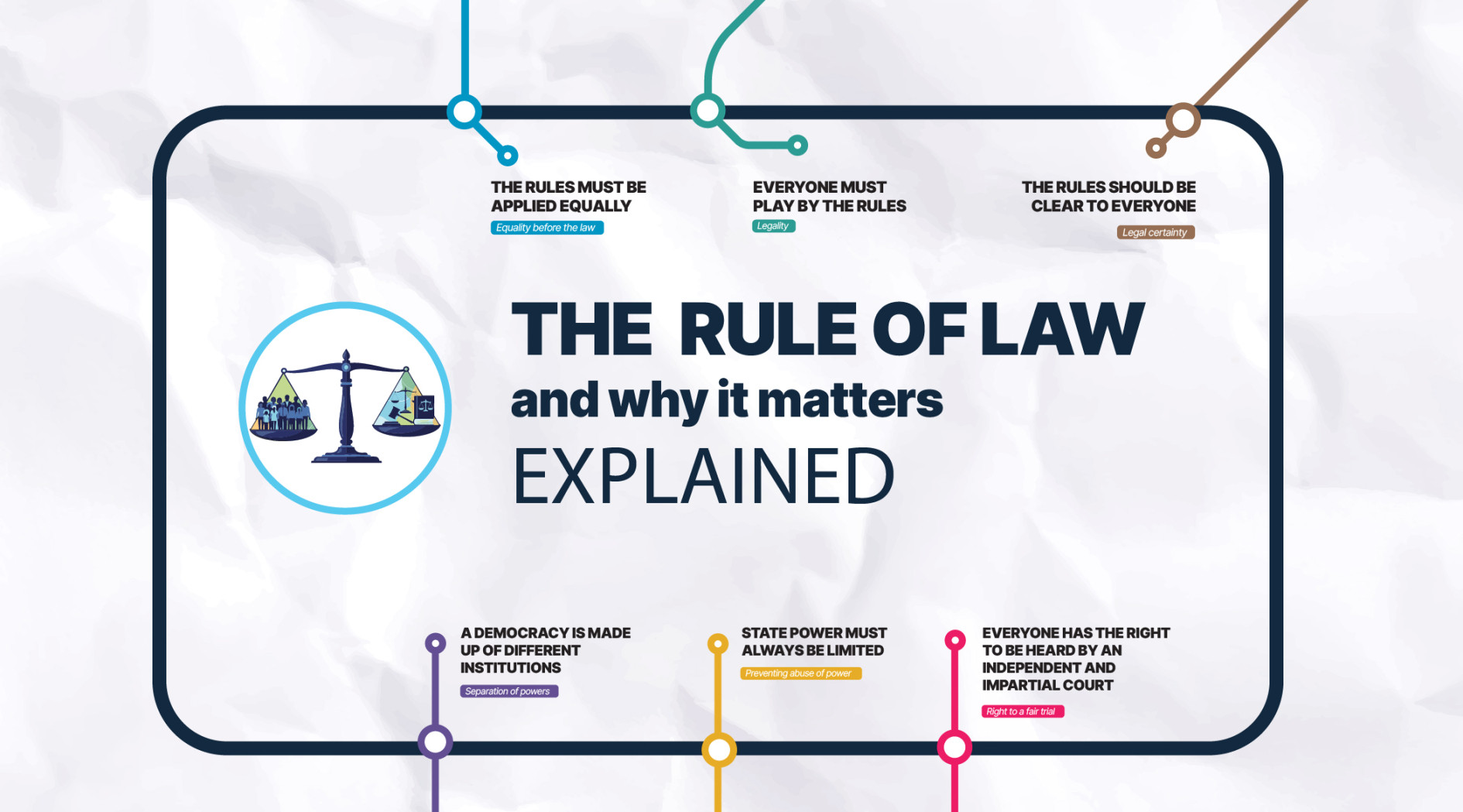
Think of the protections many of us use (or may need) as different lines on that network: laws on equal pay and equal treatment at work; safe and fair access to services; protection from harassment and violence; and the ability to complain, get a decision, and have it enforced. They work only when the whole system is functioning.
Now imagine one line starts to fail: the courts are slowed down or politicised; oversight bodies lose independence; journalists or civil society are intimidated; or some people are quietly treated as ‘less equal’ under the law.
Like a metro breakdown, the disruption doesn’t stay contained. It ripples across the network, and the people who already face barriers are usually the first to feel the impact.
That is why the rule of law matters more than ever: it is the basic operating system that makes gender equality protections truly enforceable.
The video on this page is a product developed by a network for Human Rights and Equality communicators in Europe. Often referred to as the “C11”, it brings together communications leads from key European and international human rights and equality bodies to pool expertise and develop joint communications that make rights and protections easier to understand.
Participating organisations include the Council of Europe, Council of Europe Commissioner for Human Rights, EEA-Norway Grants, The European Institute for Gender Equality (EIGE), European Network of National Human Rights Institutions (ENNHRI), Equinet, European Union Agency for Fundamental Rights (FRA), The Office for Democratic Institutions and Human Rights (ODIHR) and The Office of the United Nations High Commissioner for Human Rights (UN OHCHR).


